
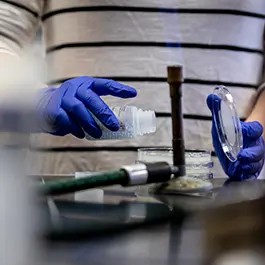
Safer Chemicals and Materials
Design chemicals, materials, and production systems that reduce harmful contaminants and protect human and ecosystem health.

The Thriving Planet Institute (TPI) at Northwestern advances systems‑level, community‑engaged research and education to address interconnected water, land, and air challenges shaping human and planetary health.
From Local Systems to Global Solutions
Sustainability challenges are accelerating, and they rarely arrive one at a time. They show up as interconnected pressures on our climate, health, infrastructure, food and water systems, and the resilience of our communities.
TPI's work is built to move—from discovery to piloting, testing, and scaling—so research can inform decisions and practices that improve lives.
Learn about our research and priorities and meet our University partners.
Design chemicals, materials, and production systems that reduce harmful contaminants and protect human and ecosystem health.

Strengthen ecosystem services like flood protection, heat mitigation, and water filtration to help communities adapt to climate impacts.

Improve the access, quality, safety, and reliability of water and food systems where gaps and inequities threaten health.

Build open-source data, models, and tools that help partners assess risk, compare interventions, and invest with confidence.
Water security is central to TPI's mission. The Northwestern Center for Water Research anchors and accelerates this work by supporting research, partnerships, and practical solutions that strengthen water systems and protect public health.

Keep up-to-date on the work Northwestern does at the intersection of the environment and human health.
TPI supports interdisciplinary teams doing rigorous, actionable research that accounts for interactions among water, land, air, and human well-being, and translates that work into tools, practices, technologies, and policies.
Support the Thriving Planet Institute's work or reach out to connect, collaborate, and learn more.